[안심이 요약 (new_ansim_summary)]
- A senior dog that stares at walls, wanders at night, or seems confused is not automatically showing canine cognitive dysfunction syndrome (CCDS), because pain, sensory loss, medical disease, and neurologic problems can cause similar behavior changes.
- DISHAA is useful for organizing changes in orientation, social interaction, sleep, house-soiling and learning, activity, and anxiety, but it is an observation framework rather than a stand-alone diagnostic test for dementia.
- Environmental support, appropriate activity, nutrition strategies, and medication may all be considered in CCDS management, but diet, supplements, and drugs should be individualized because many senior dogs also have other health conditions.
F형 공감:
When a dog who has known every corner of the house for years suddenly stands facing the wrong side of a doorway or stares at a wall for a long time, it can be frightening. Ansim would rather have you ask what else has changed in daily life before deciding that dementia is the answer.
[검증된 근거 (Evidence)]
핵심 인사이트 (keyInsight):
Canine cognitive dysfunction syndrome (CCDS) is an age-related progressive neurodegenerative syndrome. Beta-amyloid deposition is an important pathologic feature reported in aging canine brains, but CCDS should not be described as a disease caused by beta-amyloid alone. Brain atrophy, vascular changes, oxidative stress, mitochondrial dysfunction, and other age-related neural changes have also been reported. Clinically, affected dogs may show disorientation, altered social interaction, sleep-wake changes, house-soiling or learning and memory changes, altered activity, anxiety, and fear.
Current senior-care guidance approaches CCDS as a diagnosis of exclusion, meaning other medical and neurologic causes of behavior change should be investigated first. DISHAA can help structure owner observations and monitor changes over time, but it does not confirm CCDS by itself. Management may include treatment of concurrent disease, environmental enrichment, lifestyle modification, selected nutritional strategies, prescription diets, and medication, all tailored to the individual dog.
주의 사항 (cautionNote):
Do not assume that wall staring, nighttime wandering, or house-soiling is simply “old age” or dementia. Sudden blindness, persistent circling, seizures, collapse, major changes in consciousness, or sudden inability to walk should not be attributed to CCDS progression without prompt veterinary evaluation. MCT oil, antioxidant supplements, and other cognitive products should not be treated as universal therapies and should be discussed in the context of the dog’s current diet and medical conditions.
참고 자료 1 (references)
제목: Managing Cognitive Dysfunction and Behavioral Anxiety
기관/출처: American Animal Hospital Association
타입: Veterinary Clinical Guideline
URL: https://www.aaha.org/resources/2023-aaha-senior-care-guidelines-for-dogs-and-cats/managing-cognitive-dysfunction-and-behavioral-anxiety/
참고 자료 2 (references)
제목: First ever guidelines published for diagnosis and monitoring of canine cognitive dysfunction
기관/출처: American Animal Hospital Association
타입: Guideline Summary / Veterinary News
URL: https://www.aaha.org/trends-magazine/publications/first-ever-guidelines-published-for-diagnosis-and-monitoring-of-canine-cognitive-dysfunction/
참고 자료 3 (references)
제목: Cognitive dysfunction syndrome
기관/출처: Cornell University College of Veterinary Medicine
타입: Canine Senior Health Reference
URL: https://www.vet.cornell.edu/departments-centers-and-institutes/riney-canine-health-center/canine-health-topics/cognitive-dysfunction-syndrome
참고 자료 4 (references)
제목: 2023 AAHA Senior Care Guidelines for Dogs and Cats
기관/출처: American Animal Hospital Association
타입: Veterinary Clinical Guideline
URL: https://www.aaha.org/resources/2023-aaha-senior-care-guidelines-for-dogs-and-cats/
참고 자료 5 (references)
제목: Prevalence of behavioral changes associated with age-related cognitive impairment in dogs
기관/출처: Journal of the American Veterinary Medical Association
타입: Peer-reviewed Research
URL: https://avmajournals.avma.org/view/journals/javma/218/11/javma.2001.218.1778.xml
참고 자료 6 (references)
제목: Supporting Your Senior Pet: Veterinary Care Recommendations
기관/출처: American Animal Hospital Association
타입: Senior Pet Care Reference
URL: https://www.aaha.org/resources/supporting-your-senior-pet-veterinary-care-recommendations/
[본문 내용 (Content)]
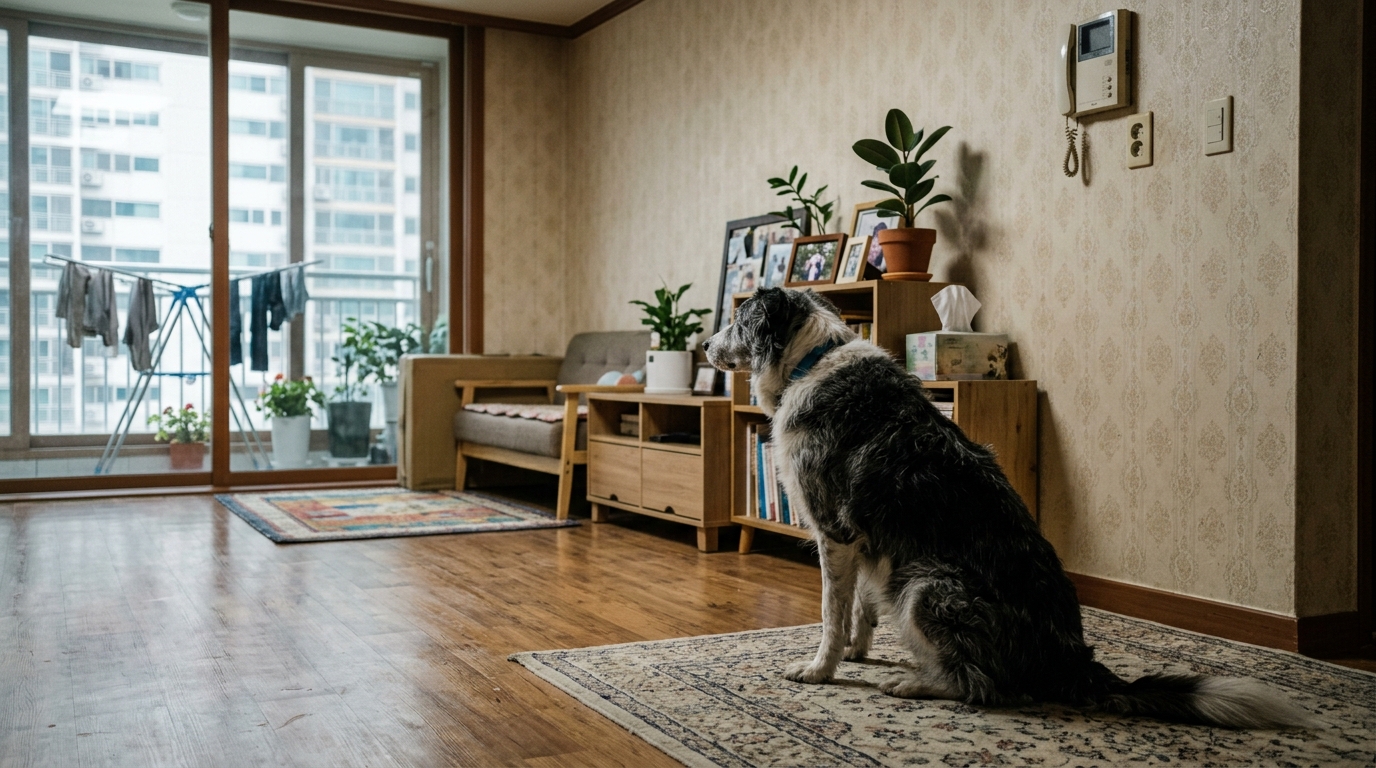
Your fourteen-year-old dog has known the house for years.
Then one evening, you find them standing in the corner of the living room, staring at the wall. You call their name, but the response is slower than usual. A few days later, the dog walks toward an open door and waits on the hinge side instead of walking through.
Nighttime is changing too. Your dog sleeps deeply during the day, then gets up after midnight, wanders from room to room, and sometimes whines for no obvious reason.
Most owners eventually type something like this into a search bar:
“Why does my senior dog stare at the wall?”
And one word appears quickly:
“Dementia.”
Canine cognitive dysfunction syndrome, or CCDS, can indeed cause disorientation, changes in sleep, altered interaction with family, and prolonged staring or getting stuck in familiar spaces.
But one rule matters here.
Wall staring by itself does not diagnose canine dementia.
A dog may pause near a wall because vision has declined. Pain may make turning or navigating tight spaces harder. Hearing loss can make a dog seem less responsive. Neurologic disease or internal medical disease can also change nighttime behavior.
So Ansim starts with a different question:
“What has changed, and could something else explain it?”
| What you notice | Can it occur with CCDS? | What else should be considered? |
|---|---|---|
| Staring at walls or empty space | Yes | Vision loss, neurologic disease, environmental stimuli |
| Getting lost or stuck in familiar rooms | Yes | Sensory decline, neurologic disease, pain |
| Sleeping more by day and wandering at night | Yes | Pain, medical illness, anxiety, sleep disruption |
| Less greeting or unusual clinginess | Yes | Pain, hearing loss, vision loss, anxiety |
| New house-soiling | Yes | Urinary disease, kidney disease, GI disease, mobility problems |
| Repetitive pacing or circling | Yes | CCDS, neurologic disease, anxiety, pain |
| Suddenly avoiding stairs or couches | Not specific for CCDS | Arthritis, musculoskeletal pain |
| Suddenly bumping into furniture | Should not be dismissed as CCDS | Acute vision loss, neurologic disease |
What Is Canine Cognitive Dysfunction Syndrome?
What owners often call “dog dementia” is usually referred to in veterinary medicine as canine cognitive dysfunction syndrome, or CCDS.
It is an age-related neurodegenerative syndrome that can affect memory, learning, spatial awareness, sleep, social interaction, and behavior.
The word “syndrome” matters.
This is not a condition diagnosed by one blood value or one simple test.
It is recognized through a pattern of behavior changes while other causes are evaluated.
That means a veterinarian is not only asking, “Does this look like CCDS?”
They are also asking:
“What else could make an older dog behave this way?”
Is Beta-Amyloid the Cause of Canine Dementia?
Beta-amyloid is often mentioned in discussions of CCDS.
Older dogs can develop beta-amyloid deposition in the brain, and this is considered an important pathologic feature in canine cognitive aging.
But the explanation should not be reduced to:
“Beta-amyloid builds up, brain cells die, and dementia happens.”
Aging canine brains can show several changes at the same time.
These may include brain atrophy, vascular changes, oxidative stress, mitochondrial dysfunction, and other degenerative processes.
So beta-amyloid matters.
It is one piece of the puzzle.
It is not the whole puzzle.
Is CCDS the Same as Alzheimer’s Disease?
There are similarities.
Both involve age-related cognitive decline, and dogs can show brain changes that overlap with features studied in human Alzheimer’s disease.
That is one reason aging dogs are often discussed in comparative neuroscience.
But they are not identical diseases.
The clinical diagnosis, pathologic changes, and treatment framework in dogs are not simply copied from human Alzheimer’s disease.
“Dog dementia” is a useful phrase for owners.
Veterinary evaluation still follows canine-specific criteria and differentials.

Does Wall Staring Mean CCDS?
It can occur with CCDS.
A dog with impaired spatial awareness may stare at a wall, appear stuck in a corner, or have trouble navigating through a familiar room.
But short periods of wall staring can also have much simpler explanations.
The dog may notice a sound, light reflection, scent, or movement that you do not.
The more meaningful changes are things like getting trapped between furniture, waiting on the wrong side of an open door, or repeatedly failing to find a familiar route.
In those situations, wall staring becomes part of a larger pattern of disorientation and spatial confusion.
Other Problems Can Make a Senior Dog Look “Cognitively Impaired”
Vision loss can make a dog hesitate in familiar rooms.
Hearing loss can make them seem less responsive to family members.
Arthritis or back pain can make turning, getting up, or moving through narrow spaces more difficult.
Neurologic problems such as brain disease, vestibular disorders, or seizure-related conditions can also change behavior.
That is why one snapshot—“my dog is facing the wall”—is not enough.
Look at vision, hearing, mobility, pain, neurologic signs, sleep, and daily behavior as a whole.
What Is DISHAA?
DISHAA is a commonly used framework for organizing behavior changes associated with canine cognitive dysfunction.
The letters refer to broad categories:
D for Disorientation.
I for changes in social Interaction.
S for changes in the Sleep-wake cycle.
H for House-soiling and changes in learning or memory.
A for Activity changes.
A for Anxiety or fear.
Older resources may use DISHA, while newer discussions often include the second A for anxiety.
The value of DISHAA is that it helps owners turn a vague feeling—
“Something is different.”
into more specific observations.
Does a High DISHAA Score Confirm Dementia?
No.
This is one of the most important distinctions.
DISHAA is an observation framework.
It is not a formula where:
“Four categories = CCDS.”
Night waking can happen because of pain.
House-soiling can happen because of urinary disease or mobility problems.
Reduced social interaction can happen because hearing or vision has declined.
So DISHAA helps organize what has changed.
It does not prove why it changed.

D: What Does Disorientation Look Like?
A dog may seem lost in a familiar home.
They may stand on the wrong side of an open door, get stuck behind furniture, or enter a corner and appear unable to figure out how to back out.
Some dogs pause on familiar walking routes or seem uncertain about direction.
But sudden disorientation deserves extra caution.
If a dog was normal yesterday and today is persistently circling, leaning to one side, falling, or unable to walk properly, do not assume dementia simply progressed overnight.
An acute neurologic problem may need to be ruled out.
I: Can the Relationship With the Owner Change?
Yes.
A dog that used to greet you at the door may stop doing so.
Another dog may become unusually clingy and follow you constantly.
But there can be noncognitive explanations too.
A painful dog may not be able to rush to the door.
A dog with hearing loss may not realize that you came home.
A dog with vision loss may have trouble locating you.
So “my dog doesn’t greet me anymore” is meaningful.
It is not automatically memory loss.
S: Does Sleeping All Day and Pacing at Night Mean CCDS?
Sleep-wake changes are common in CCDS.
Some dogs sleep more during the day and become restless, vocal, or active at night.
But pain can also interrupt sleep.
A dog with increased thirst or urination may wake repeatedly.
Anxiety, respiratory discomfort, or other medical illness can also disturb nighttime rest.
The more useful question is:
“Why is my dog unable to settle?”
not simply:
“Is the dog awake at night?”
H: Does New House-Soiling Mean the Dog Forgot Training?
It can be part of cognitive decline.
A previously house-trained dog may urinate or defecate indoors as learned patterns become less reliable.
But house-soiling has many other causes.
The dog may be producing more urine because of kidney disease, diabetes, or another medical problem.
Urinary incontinence can develop.
Arthritis may make it hard to reach the door or navigate stairs in time.
GI disease can also cause accidents.
So house-soiling is both a possible CCDS sign and a reason to look for physical disease.
A: Activity Can Decrease—or Become Repetitive
Some dogs with CCDS become less interested in their surroundings.
Others pace without a clear purpose, repeat the same route, or circle repeatedly.
But reduced activity can also happen with pain, heart disease, respiratory disease, muscle loss, or weakness.
And new persistent circling may suggest neurologic disease.
“Activity change” is useful because it makes you compare today’s behavior with the dog’s previous baseline.
A: Anxiety and Fear Can Increase
Some senior dogs become more distressed when left alone.
Others startle more easily, pace at night, or take longer to adapt to changes at home.
Anxiety can be part of CCDS.
But sensory decline and pain can also make the environment feel less predictable.
A dog that cannot see or hear as well may become more cautious or dependent.
So anxiety should be evaluated together with physical health rather than treated as an isolated behavior problem.
How Is CCDS Diagnosed?
This is where the idea of a diagnosis of exclusion becomes important.
In plain language, it means:
Before calling the problem CCDS, the veterinarian looks for other conditions that can produce the same behavior.
That may include a physical examination, neurologic examination, assessment of pain and mobility, and review of hearing and vision.
Blood and urine testing may be recommended depending on the dog.
Other diagnostics may be considered if neurologic signs are present.
Then the clinician asks whether the behavior pattern still fits CCDS after competing medical causes have been identified or managed.
Can an MRI Diagnose Canine Dementia?
MRI can be extremely useful in some cases.
It may help identify brain tumors, inflammatory disease, structural abnormalities, or other neurologic conditions that can mimic cognitive dysfunction.
Age-related brain changes may also be seen.
But MRI is not a simple “dementia scan.”
Imaging results must be interpreted together with clinical signs.
And not every older dog with suspected CCDS needs an MRI.
Anesthesia risk, concurrent disease, severity of signs, and the goals of care all matter when deciding how far to investigate.
What Are Behavior Questionnaires Used For?
DISHAA is one way to structure observations, but other cognitive and quality-of-life questionnaires also exist.
Their strength is consistency.
Owners often say:
“Some days seem better than others.”
That makes progression hard to judge from memory alone.
If the same behaviors are recorded over weeks or months, trends become easier to see.
So questionnaires are best viewed as tracking tools.
They help owners and veterinarians discuss the same changes.
They do not replace the medical workup.

Why It Matters Not to Call Treatable Disease “Dementia”
Imagine a thirteen-year-old dog who starts pacing at night.
It may look like CCDS.
But the dog could be unable to lie comfortably because of arthritis.
The dog may stop greeting you because walking to the door hurts.
House-soiling may happen because urine output increased or because getting outside became physically difficult.
This is why the CCDS workup is not only about confirming dementia.
It is also about finding treatable sources of discomfort.
Can CCDS Be Cured?
At this time, there is no treatment that completely reverses CCDS and restores the brain to its earlier state.
But that does not mean nothing can be done.
Pain and concurrent medical disease can be treated.
The home can be made easier to navigate.
Activities can be adjusted to match the dog’s abilities.
Nutrition and medication may be considered in selected patients.
The practical goal is not simply to “make the brain younger.”
It is to reduce confusion, improve sleep, maintain appetite and mobility, and preserve daily comfort and connection with the family.
Does MCT Oil Treat Canine Dementia?
Medium-chain triglycerides, or MCTs, have been studied as part of nutritional strategies designed to support brain energy metabolism and cognitive performance in older dogs.
Some veterinary cognitive-support diets combine MCTs with antioxidants, fatty acids, and other nutrients.
But this does not mean:
“MCT oil = CCDS medication.”
A complete diet studied in research is not the same as pouring one oil onto a dog’s current food.
Some dogs may also have health conditions in which increasing dietary fat is not appropriate.
The existing diet, body condition, and concurrent disease all matter.
MCT-based nutrition is something to discuss as part of the dog’s overall plan.
Are More Antioxidants and Omega-3s Always Better?
No.
Antioxidant nutrients and fatty acids have been investigated as part of cognitive-support strategies.
But more is not automatically better.
Stacking multiple supplements can make total intake difficult to track.
A senior dog with kidney disease, GI disease, obesity, or another dietary priority may need a different nutritional plan.
Do not build a diet around cognition while ignoring the rest of the dog.
Does Every Dog With CCDS Need a Prescription Diet?
No.
A cognitive-support diet may be a reasonable option for some dogs.
But senior dogs often have competing nutritional needs.
A dog with chronic kidney disease may have different dietary priorities.
Another dog may be losing muscle and body weight and need the feeding plan to focus there first.
The right diet depends on the whole patient—not just whether one ingredient is marketed for brain health.
Can Medication Help?
Medication can be part of CCDS management for some dogs.
In North America, selegiline is one medication used for canine cognitive dysfunction.
But drug selection must consider the dog’s symptoms, concurrent diseases, and other medications because interactions and contraindications matter.
Owners should not start human medications or leftover veterinary medications on their own.
Some dogs may need pain management or anxiety treatment considered alongside cognitive support.
Medication is one part of a broader plan.
Will Daily Nose Work Stop Dementia From Progressing?
Appropriate mental stimulation can be valuable for senior dogs.
Scent games, simple problem-solving, and short interactions can help keep daily life engaging.
But no specific enrichment activity can guarantee prevention or stop CCDS progression.
A dog with arthritis, poor vision, or hearing loss may find an old favorite game too difficult.
Overly challenging tasks can create frustration instead of enrichment.
The goal is not maximum difficulty.
It is small, achievable activities the dog can still enjoy and succeed at.
Why Does a Predictable Routine Help?
A predictable environment may reduce confusion in a dog with cognitive decline.
Food, water, sleeping areas, and toileting areas should stay easy to find.
Large furniture changes can be made gradually when possible.
That does not mean every part of the day has to happen at the exact same minute.
The key is that the dog can easily understand the layout of home and reach important resources safely.
Should a Dog That Wanders at Night Be Confined to One Room?
Not automatically.
A dog may become more anxious if suddenly isolated in a small unfamiliar area.
But unrestricted access can also be unsafe if there are stairs, slippery floors, or obstacles.
The goal is to create a safe zone without making the environment confusing.
Nonslip flooring, barriers around hazards, easy access to water and toileting areas, and low-level lighting can help some dogs move around more safely at night.

Sudden Worsening Should Not Automatically Be Blamed on CCDS
CCDS is generally a progressive syndrome.
So if an older dog who was fairly stable yesterday suddenly cannot walk, develops persistent circling, has a seizure, or shows a major change in consciousness today, do not assume the dementia simply “got much worse overnight.”
Sudden vision loss deserves the same caution.
If a dog abruptly starts bumping into objects or becomes unable to navigate stairs, other eye or neurologic causes should be investigated.
Gradual cognitive decline and sudden neurologic change should not be managed the same way.
Home Records Can Be Extremely Helpful
Behavior changes often disappear in the exam room.
A dog that wanders all night at home may sit perfectly still at the veterinary clinic.
That makes the owner’s observations valuable.
Record when nighttime waking began, whether getting stuck in corners is increasing, whether social behavior has changed, whether accidents are happening, and whether favorite activities still hold interest.
If a behavior repeats and it is safe to do so, a short video can also help.
A trend over several weeks is usually more informative than one isolated memory.
Frequently Asked Questions About Canine Cognitive Dysfunction
If my dog stares at walls, does that mean dementia?
No.
Wall staring can occur with CCDS, but vision loss, hearing loss, pain, and neurologic disease can also cause similar behavior.
It should be interpreted as part of a larger pattern.
If several DISHAA categories apply, is CCDS confirmed?
No.
DISHAA helps organize behavior changes.
The medical reason for those changes still needs to be evaluated.
What is the difference between DISHA and DISHAA?
DISHA traditionally grouped disorientation, interaction, sleep, house-soiling, and activity.
DISHAA adds anxiety or fear as another important behavior domain.
Does sleeping all day and wandering at night mean dementia?
It can occur with CCDS.
But pain, urinary problems, endocrine disease, and other medical conditions can also disrupt sleep.
My senior dog suddenly started having accidents indoors
Cognitive decline is one possibility.
Urinary disease, increased urine production, incontinence, GI disease, and mobility problems should also be considered.
Can I just add MCT oil to the food?
MCTs have been studied as part of cognitive-support nutrition.
But adding oil to an existing diet is not the same as using a complete diet studied for this purpose.
Discuss it in the context of the dog’s current diet and medical history.
Should I give several brain supplements together?
More products are not automatically better.
Ingredient overlap, total intake, existing disease, and the current diet all matter.
Can medication improve CCDS?
Some dogs may benefit from veterinary medication as one part of the management plan.
The appropriate choice depends on symptoms, other diseases, and current medications.
Can daily nose work prevent dementia?
Enrichment can support quality of life and mental activity.
But no single exercise can guarantee prevention or stop progression.
Is MRI necessary to diagnose CCDS?
Not for every dog.
MRI is especially useful when another structural brain disorder needs to be ruled out.
My dog suddenly started circling in one direction. Is the dementia worse?
Sudden persistent circling should not be assumed to be routine CCDS progression.
Prompt veterinary evaluation may be needed to look for another neurologic cause.
The First Goal Is Not to “Prove Dementia”
When an older dog stands facing a wall, owners naturally compare that dog with the one they knew a year ago.
Not long ago, the same dog ran to the door when the leash came out.
Now the behavior feels different.
So it is natural to want a fast answer:
“Is this dementia?”
Ansim waits before attaching the label.
Wall staring.
Night waking.
House-soiling.
Reduced greeting.
All of those can occur with cognitive decline.
But similar changes can happen when a dog is painful, cannot see well, cannot hear well, or is waking because of another disease.
DISHAA is useful because it helps organize those changes.
It does not replace the diagnosis.
Beta-amyloid is also important.
It does not explain every part of CCDS by itself.
The same is true for MCTs, antioxidants, enrichment, and medication.
CCDS management is not about finding one product that fixes the brain. It is about identifying what is making this individual dog uncomfortable and reducing those problems one by one.
Treat pain when pain is present.
Make routes easier if the dog gets confused.
Block dangerous stairs.
Offer activities that are simple enough to succeed at.
And after other medical causes have been assessed, if disorientation, sleep disruption, memory changes, and altered social behavior remain, then CCDS can be evaluated more confidently.
Recognizing cognitive decline early matters.
So does avoiding the mistake of calling a treatable disease “just old age and dementia.”
Ansim’s Research Note
When a senior dog stares at a wall, that image is powerful.
Owners remember the wall.
Ansim writes down much more than that.
When did it start?
How is nighttime sleep?
Has house-training changed?
Does the dog still greet family?
Is walking different?
Are vision and hearing the same as before?
Once those pieces are collected, the cognitive pattern becomes easier to understand.
DISHAA works the same way.
It is not a home dementia test.
It is a map that helps owners notice changes they might otherwise miss.
Beta-amyloid is also an important part of the research story, but not the entire explanation for CCDS.
Nutrition, MCTs, supplements, and medication are not one-size-fits-all solutions either.
Every senior dog has a different body, different concurrent diseases, a different diet, and a different level of anxiety or confusion.
So the question Ansim keeps coming back to is:
“What is making this dog’s day harder right now, and what can we make easier?”
Cognitive care is not only about a memory score.
It is about helping an older dog find water safely, sleep more comfortably, move through the home with less confusion, and stay connected with the family for as long as possible.
Leave a Reply