Category: Health & Disease
-

What to Do If Your Dog Suddenly Has a Seizure: First-Seizure Guide and Emergency Signs
[안심이 요약 (new_ansim_summary)] A dog that suddenly collapses, stiffens, or paddles their legs may be having a seizure, but one episode alone does not automatically mean epilepsy. During a seizure, keep your dog away from hazards, time the episode, and record a video from a safe distance if possible rather than putting your hands near…
-

Why Does My Senior Dog Stare at the Wall? Canine Cognitive Dysfunction, DISHAA, and What to Rule Out First
[안심이 요약 (new_ansim_summary)] A senior dog that stares at walls, wanders at night, or seems confused is not automatically showing canine cognitive dysfunction syndrome (CCDS), because pain, sensory loss, medical disease, and neurologic problems can cause similar behavior changes. DISHAA is useful for organizing changes in orientation, social interaction, sleep, house-soiling and learning, activity, and…
-

Why Does My Dog Keep Licking Their Paws? Allergies, One-Paw Licking, and When to See a Vet
[안심이 요약 (new_ansim_summary)] A dog that keeps licking its paws does not automatically have allergies, and one of the most useful first clues is whether the licking suddenly affects one paw or repeatedly involves several paws. Recurrent licking of multiple paws can occur with allergic skin disease, but foreign objects, minor injuries, damaged nails, parasites,…
-

I Thought It Was Just Grooming… Could It Be Anal Gland Issues? 3 Warning Signs When Your Cat Obsessively Sniffs Itself
1. The main reasons cats suddenly focus on their own scent are anal gland problems, skin issues, and stress responses. 2. Brief sniffing is normal, but obsessive sniffing combined with licking or biting is a health warning sign. 3. If strong odor, redness, discharge, or hair loss appears, visit the veterinary clinic without delay. [Empathy]…
-

Why Does Your Dog Suddenly Twitch and “Run” in Their Sleep? Causes and Danger Signals
1. The main cause of a dog moving their legs while sleeping is a normal phenomenon where they dream and replay daytime activities during the REM sleep stage. 2. Light movements where they wake up immediately when called are normal, but if their whole body stiffens, they drool excessively, and remain unconscious even when you…
-
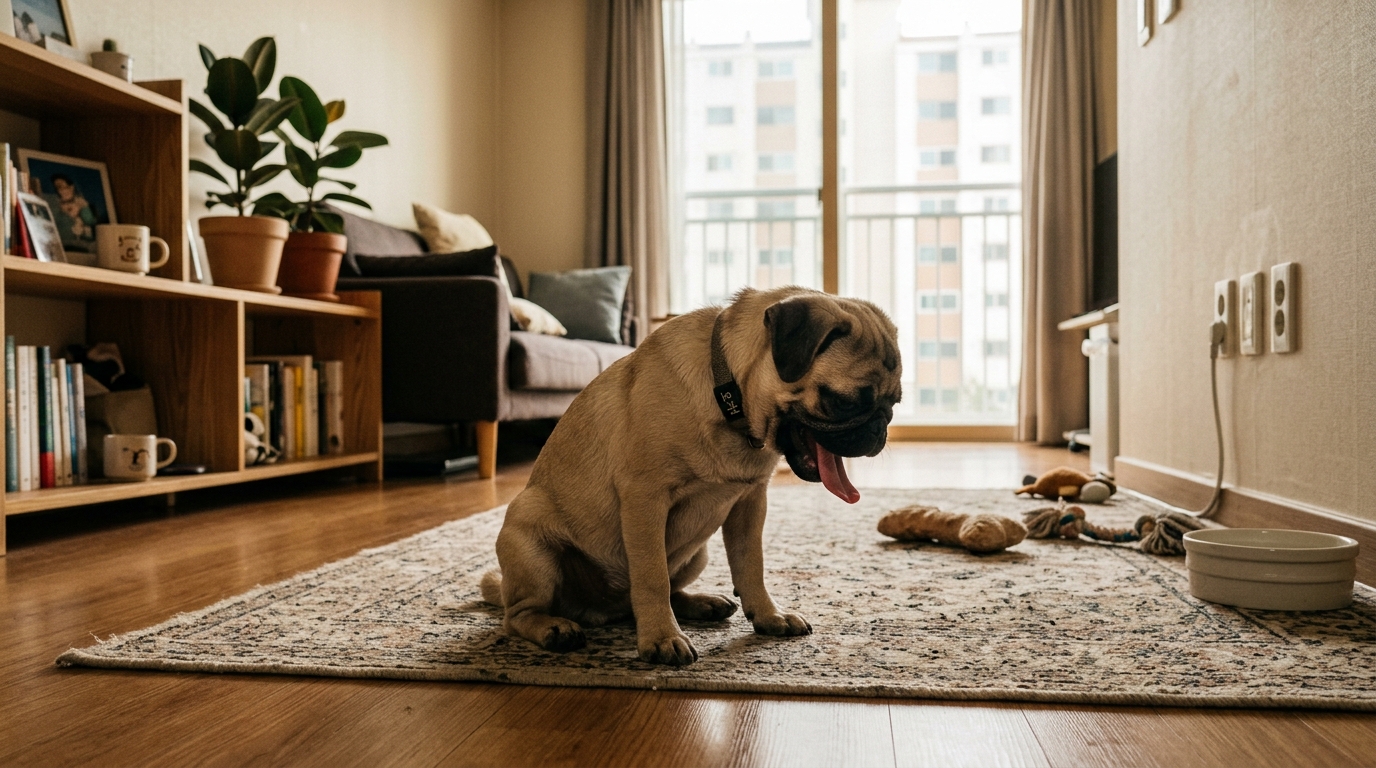
Comprehensive Guide to the Causes of Dog Wheezing and Emergency Signs of Tracheal Collapse and Pulmonary Edema
1. Temporary causes of dog wheezing include reverse sneezing or excitement, which naturally improve once they calm down. 2. If goose-honking sounds (Tracheal collapse) or wet, crackling sounds (Pulmonary edema/Heart disease) persist, it may be due to a pathological cause requiring a thorough medical examination. 3. Cyanosis (gums turning blue), orthopnea (inability to lie down),…
-

“Reducing Food Made It More Dangerous!” The Secret to Pet Weight Loss Revealed by Ansim-i
1. Sudden starvation diets are very dangerous as they cause muscle loss and induce a yo-yo effect. 2. If cats starve for more than two days, they can develop life-threatening acute ‘Hepatic Lipidosis.’ 3. Aim to lose 1-2% of body weight per week, combining portion control with flat-ground walks and feather wand play. [Empathy] (My…
-

Your Dog Might Not Be Just ‘Chubby,’ But Obese: How to Check Obesity Levels at Home
1. Pet obesity is caused by a complex interaction of excessive calorie intake, hormonal changes due to spaying/neutering and aging, and genetic factors. 2. To accurately assess a pet’s body condition, utilize the Body Condition Score (BCS) and the “Rib Palpation Method” (feeling the ribs with your hands) rather than relying solely on the scale.…
-

7 Dog Skin Disease Signs to Check First: Itching, Dandruff, Red Skin, Hair Loss, and When to See a Vet
1. Repeated scratching, paw licking, redness, dandruff, odor, hair loss, crusts, or recurrent ear problems can come from several different skin diseases—not allergy alone. 2. A useful dermatology history includes where the itch occurs, when it started, whether it is seasonal, parasite prevention, and response to previous treatment. 3. Rapidly worsening lesions, marked pain, bleeding…
-

Can Dogs With Patellar Luxation Still Walk? Exercise, Warning Signs, and Weight Management
1. A diagnosis of patellar luxation does not automatically mean that every dog must stop walking. In mild cases, controlled low-impact activity and weight management may be part of conservative care. 2. If limping becomes persistent, your dog repeatedly refuses to bear weight, or pain and mobility worsen, the knee should be reassessed rather than…