| What you notice | Can it occur with Cushing’s? | What else matters |
| Drinking and urinating more | Common | Kidney disease, diabetes, drugs and other causes must be considered |
| Increased appetite | Common | Track body weight and muscle condition |
| More panting | Possible | Heat, pain and heart/lung disease can look similar |
| Pot-bellied appearance | Possible | Abdominal fat and muscle weakness may contribute |
| Thin skin or symmetrical hair loss | Possible | Look for recurrent skin infections as well |
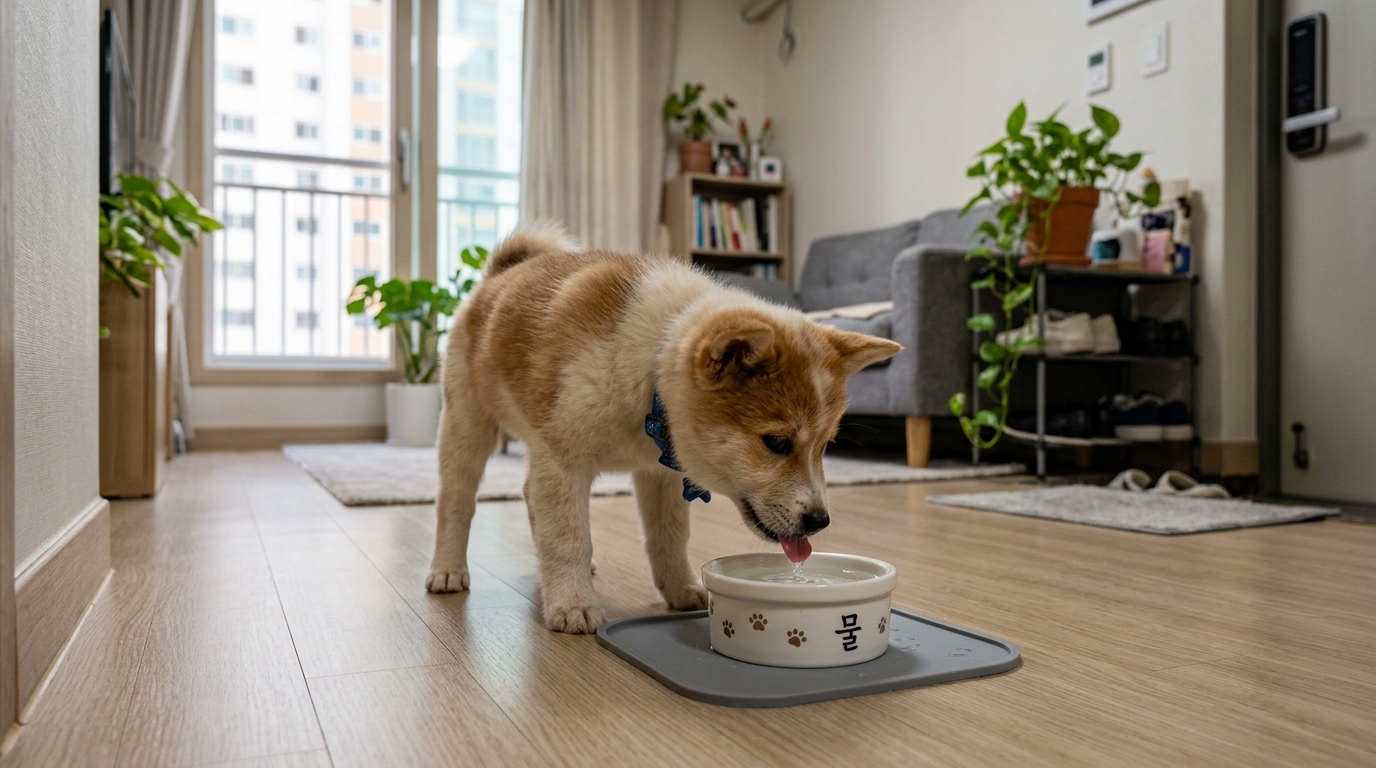
A senior dog drinking more water does not automatically have Cushing’s syndrome.
But the opposite mistake is also common: gradual changes are blamed on age until several clues have been present for months.
Cushing’s syndrome, or canine hypercortisolism, describes the clinical effects of excessive glucocorticoid exposure.
🔎 Ansim-i explains: this is a “pattern” disease. The more compatible changes that appear together, the more useful the suspicion becomes.
Why Cushing’s syndrome can make a dog drink and urinate more
Excessive glucocorticoid activity can interfere with normal water balance and the kidney’s ability to concentrate urine. Affected dogs may drink more and produce larger volumes of urine.
However, polyuria and polydipsia are not specific to Cushing’s. Diabetes mellitus, chronic kidney disease, liver disease, some medications, and other disorders can produce the same household observation.
Write down whether the bowl is being refilled more often, whether nighttime urination has increased, and whether new accidents have appeared.

Senior dog Cushing’s signs: look beyond the water bowl
Many dogs with Cushing’s also develop increased appetite, more frequent panting, reduced muscle strength, and a rounded or pendulous abdomen.
The coat may become thin or slow to regrow. Skin can appear fragile, and recurrent bacterial or yeast infections may become part of the story.
Because these changes are often gradual, comparing current photos and activity with several months ago can be surprisingly informative.
Why one cortisol test cannot diagnose canine Cushing’s syndrome
Cortisol responds to stress and illness, so an isolated high result is not the same thing as a diagnosis.
The AAHA endocrinology guidelines emphasize testing dogs with a meaningful clinical suspicion rather than screening every dog with a vague laboratory abnormality. Acute illness can also increase the chance of misleading endocrine test results.
Depending on the patient, veterinarians may use a low-dose dexamethasone suppression test, an ACTH stimulation test, or other targeted testing and interpret it in context.

What to record before a Cushing’s work-up
“He drinks a lot” becomes much more useful when paired with a timeline. Note when the change began, whether urination increased, appetite changed, body weight shifted, or panting became more noticeable.
Bring a complete medication list, including tablets, injections, ear products, eye products, and skin medications. Glucocorticoid exposure can create Cushing-like signs and can affect testing decisions.
A short video of panting, weakness, or unusual behavior can also help if the sign is difficult to reproduce in the clinic.
What imaging and additional testing may add
After hypercortisolism is confirmed, the veterinary team may need to determine whether the source is primarily pituitary-dependent or adrenal-dependent.
Abdominal ultrasound can help evaluate the adrenal glands and look for concurrent changes in organs such as the liver or gallbladder. Some dogs may need additional hormone testing or advanced imaging.
The purpose is not to collect tests for their own sake. The goal is to understand the form of disease and the factors that influence treatment choices.
Cushing’s treatment is individualized, not an internet dosing exercise
Medical management requires an individualized prescription and follow-up plan. The appropriate drug, starting approach, and monitoring schedule depend on the dog’s diagnosis and clinical status.
At home, appetite, thirst, urination, energy, and new gastrointestinal signs are important. These observations help the veterinary team decide whether treatment is achieving the intended clinical effect safely.
Do not independently increase, decrease, stop, or restart endocrine medication because a single symptom or laboratory number changed.

When increased thirst deserves faster veterinary attention
Persistent, obvious increases in drinking and urination—especially with muscle loss, skin problems, appetite change, or weight change—deserve a veterinary evaluation rather than indefinite observation.
If a dog develops vomiting, diarrhea, marked lethargy, refusal to eat, breathing difficulty, collapse, or new neurologic signs, an acute illness may be present and should be assessed promptly.
Ansim-i’s key point: track the slow pattern, but do not explain every acute illness away as “the Cushing’s acting up.”
Ansim-i’s Research Note: aging is not a diagnosis
Older dogs naturally change, but “aging” should not become a label that stops us from asking why.
Monthly body photos, a simple water-and-urination note, and a record of appetite and activity can reveal trends that memory misses.
Your veterinarian makes the diagnosis. Your everyday observations provide the timeline that makes the diagnostic story clearer.
🔬 Veterinary Evidence & References
Magentalab Research Team has reviewed relevant veterinary guidelines to verify the core content.
💡 Key Medical Evidence Summary
AAHA describes polyuria/polydipsia, polyphagia, panting, and dermatologic changes among common signs of canine hypercortisolism and stresses that endocrine tests can produce false-positive results in stressed or concurrently ill patients.
2023 Selected Endocrinopathies of Dogs and Cats Guidelines – Canine Hypercortisolism (Cushing’s Syndrome)
•
Guideline
Categorical Approach to Diagnosis and Diagnostic Testing/Monitoring for Canine Hypercortisolism.
•
Guideline
⚠️ Medical Disclaimer & Individual Variance
This article does not provide medication doses or a home treatment protocol. Do not stop glucocorticoids abruptly or adjust Cushing’s medication without veterinary direction.
Veterinary Clinical Guidelines & Institution Guidelines
* Evidence classification based on Magentalab evaluation standards.
Leave a Reply