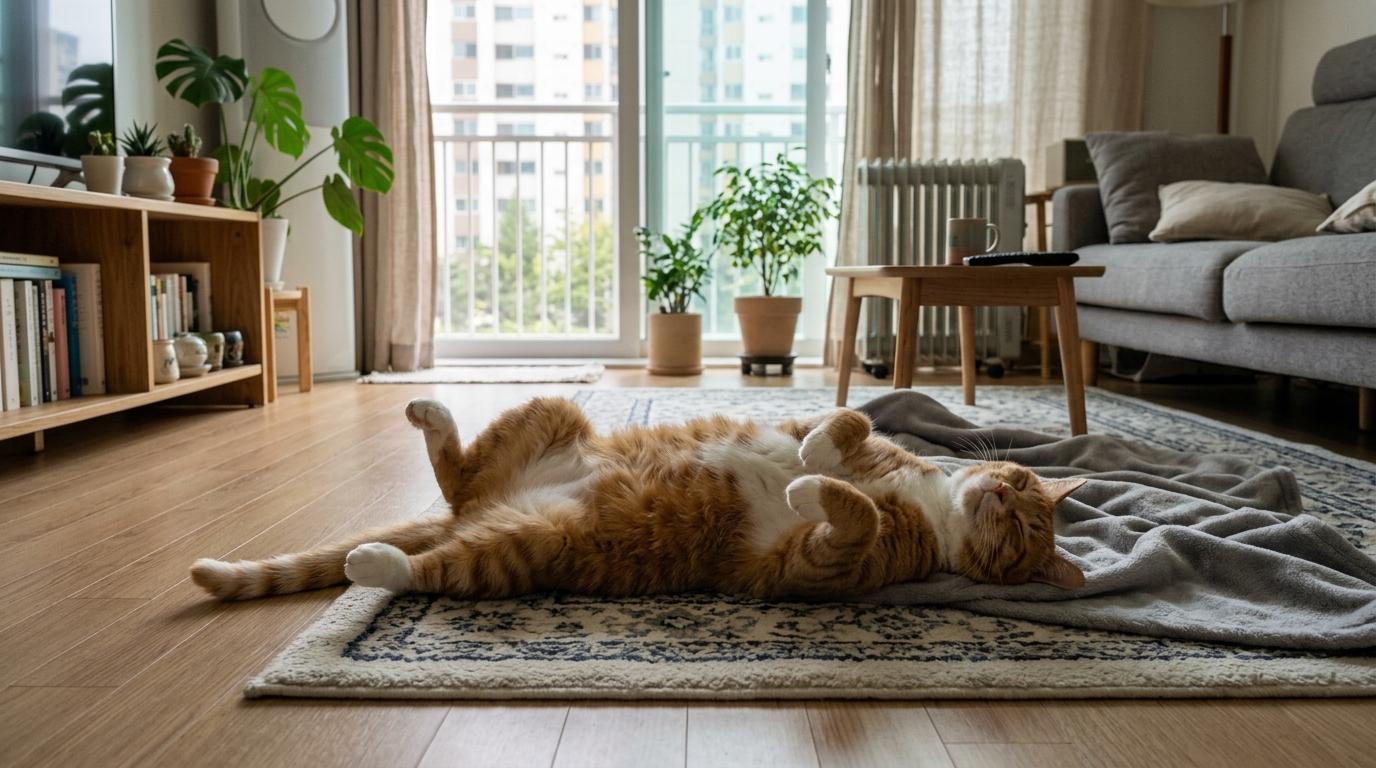
Pet parents, did your cat suddenly bite and scratch you when you touched their exposed belly? Hello! I am Ansim-i the Dachshund, Senior Researcher at Magentalab Pet Research Institute! 🐾 Today, adjusting my round horn-rimmed glasses, I brought a cat behavior analysis report that might make beginner pet parents a little anxious. “My cat rolled over and showed its belly, so I petted it because it was cute, but it suddenly bit and scratched my hand. Does it hate me?” Many pet parents share this exact concern. Don’t worry. Your cat doesn’t hate you. Let’s unravel the causes of this misunderstanding one by one with Ansim-i.

1. Why is a cat’s belly so sensitive?
A cat’s belly is its most vulnerable area, entirely unprotected by bones. Because vital organs are exposed right underneath, they instinctively hide and defend their bellies in the wild to protect themselves from predators. Therefore, no matter how much they trust their pet parent, a sudden touch to the belly can trigger a reflexive defensive instinct. This isn’t because they dislike you, but an instinctive reaction screaming, “My weakest spot was suddenly touched!”
The Most Important Misconception
A cat rolling over and showing its belly is NOT a “request to be petted.” It means something completely different from dogs. For a cat, showing the belly expresses the highest level of trust and comfort, meaning, “I trust you deeply right now, and I feel completely safe in this space, so I am relaxed.” In other words, it is “showing their state,” not “giving permission to touch.” If you suddenly shove your hand in, the cat gets startled or feels their trust has been broken, leading to a defensive response.

2. Normal Rejection vs. Strong Attack Signals
Being able to gauge your cat’s stress level through their reaction to a belly touch is what makes you a great pet parent, right? Ansim-i will clearly distinguish these signals for you!
✅ This is Normal (Light Rejection)
-
Quietly moving away or turning their body
-
Gently pushing your hand away with their hind legs
-
Pretend biting with almost no force applied
-
Slightly twitching the tail or pulling the ears back → At this point, immediately remove your hand and give the cat some personal space.

⚠️ This is Dangerous! (Strong Stress & Aggression)
-
Pupils dilate significantly
-
Thumping the tail hard against the floor (“thwack, thwack”)
-
Hissing or growling
-
Claws out, grabbing your hand tightly, and actually biting hard
-
Rolling over and attacking with both front and back paws (bunny kicking) → Immediately withdraw your hand and do not stimulate them further. Continuing to touch them in this state can severely damage your bond of trust.

3. Safe Physical Affection Methods to Build Intimacy
Ansim-i completely understands your desire to pet and connect with your cat. However, it is best to start slowly in areas other than the belly.
Recommended Order:
-
Under the chin
-
Around the cheeks
-
Behind the ears
A cat’s facial area (chin, cheeks, between and behind the ears) has a high concentration of ‘pheromone glands’ that release their unique scent. When you gently scratch or pet these areas, the cat leaves its scent on you, feeling an extreme sense of security and pleasure. Beginner pet parents should target the chin and cheeks to build intimacy first, rather than the belly. In short, these are areas where cats deposit their pheromones, and being petted there brings them comfort and relief. Building intimacy starting from the face is the safest and most effective method.

How to Read a Cat’s “Stop!” Signal (Tail Language)
Cats speak with their whole body. If your cat’s tail starts swishing side to side or their ears flatten horizontally (“airplane ears”) during petting, this is a warning signal meaning, “Stop touching me now!” A pet parent who quickly notices this and removes their hand is the one recognized as the best partner by the cat.
Signals You Must Observe During Petting:
-
The tail starts swishing side to side
-
The ears flatten horizontally (“airplane ears”)
-
The body tenses slightly or they avoid eye contact If you see these signals, it means “stop now,” so please remove your hand immediately. Pet parents who are quick to catch these hints are recognized as the ultimate partners by their cats.

4. Could They Be Sick? When to Visit the Vet
If your usually calm cat suddenly becomes highly sensitive or screams just by having their belly touched, pain might be the cause. Please visit a veterinary clinic in the following cases:
-
They cry sharply or scream even if the belly is lightly brushed
-
They severely crouch or show extreme aggression when you try to touch their belly
-
They excessively lick the belly area, causing hair loss or red skin
-
These signs are accompanied by loss of appetite, vomiting, or changes in litter box habits Accurate diagnosis is necessary as there could be various causes such as Feline Infectious Peritonitis (FIP), Feline Lower Urinary Tract Disease (FLUTD), digestive issues, or dermatitis.

Skin Changes and Hair Loss Around the Belly
If they get irritated when their belly is touched and concurrently show excessive licking resulting in a bald or red, inflamed belly, it could be dermatitis or a state of “overgrooming” caused by severe stress. This also requires a veterinarian’s diagnosis.

Pet parents, it is truly embarrassing and upsetting when you reach out thinking, “You trust me!” upon seeing your cat’s belly, only to be suddenly bitten and scratched. However, that behavior is not out of hatred, but an instinct to protect their weakest part and a polite way of saying, “We are not quite there yet.” Just visually appreciating them showing their belly means the cat already deeply trusts you. I think pet parents who try to understand their cat’s feelings a little more today are truly wonderful. Ansim-i will always support you by your side!
Leave a Reply