Hello! I am Ansim, a Dachshund and senior researcher at the Magentalab Pet Research Institute. Today, I’ve prepared a helpful research report to ensure a happy journey for you and your beloved pets.
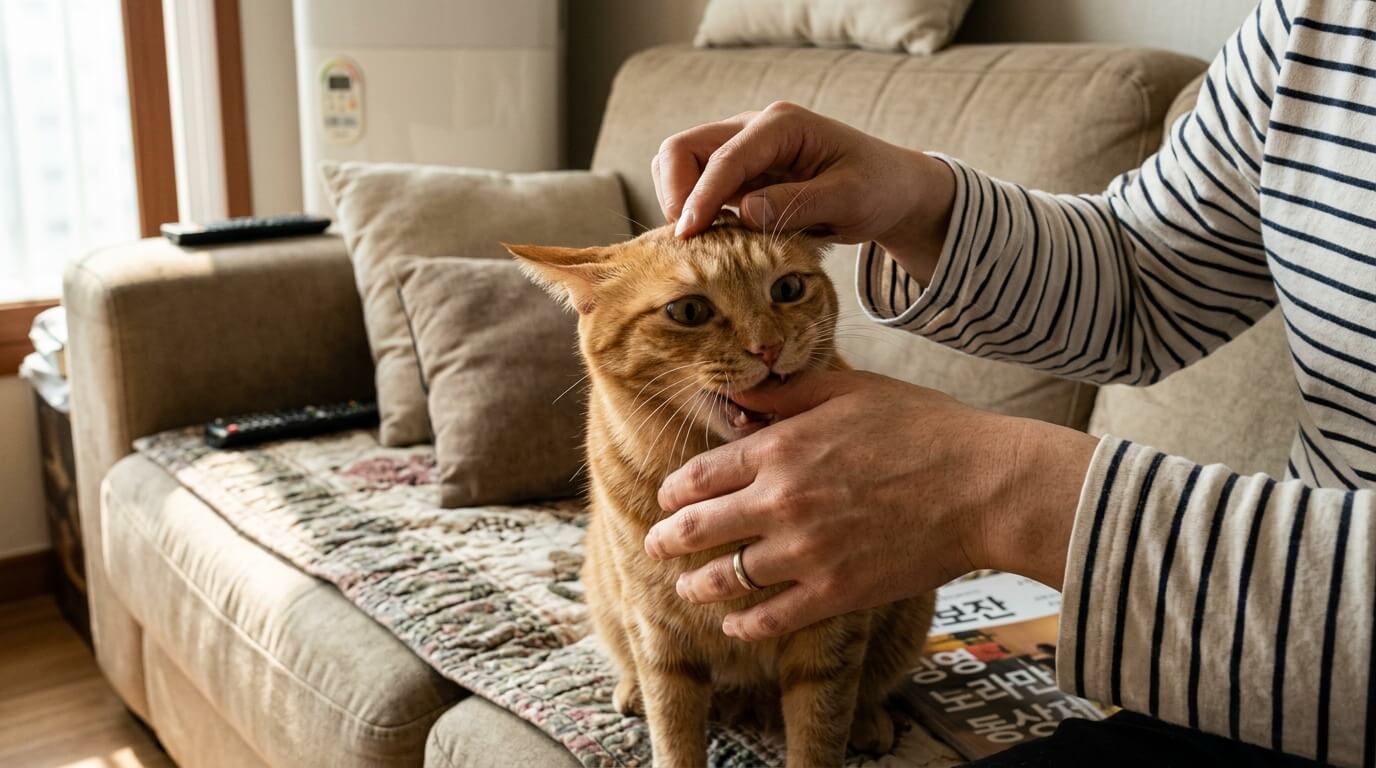
Have you ever had the experience of your cat purring happily, only to have them suddenly bite your hand and run away? It is incredibly baffling when a cat that was just showing affection by exposing its belly turns into a predator in a single second. This phenomenon, where the contradictory facts of purring—a symbol of comfort—and biting—a symbol of aggression—collide, stems from the cat’s own intricate sensory nervous system.
| Summary Item | Key Content |
| Cause | Sensory nerve overstimulation due to excessive physical contact |
| Warning Signs | Tail thumping, dilated pupils, ears pinned back (airplane ears) |
| How to Respond | Stop petting immediately when signs appear; wait until the cat approaches again on their own |
| Caution | It may be aggression due to pain, so please consult a veterinarian for an accurate diagnosis |
1. Why Cats Suddenly Bite: Petting Aggression and Sensory Overload Thresholds

The phenomenon where a cat suddenly shows aggression while enjoying a pet parent’s touch is called “Petting Aggression.” This happens when the cat’s sensory nervous system exceeds its tolerance limit, or “threshold.”
A cat’s fur and skin are covered with extremely sensitive sensory receptors. Even gentle contact can turn into stinging or uncomfortable stimulation after a certain amount of time, rather than a pleasant sensation.

To use a human analogy, it’s like how being tickled lightly is fun at first, but if it continues, it becomes painful and frustrating. To stop this unpleasant sensation, cats choose the most effective method available to them: biting.
2. Identifying Signs of Overstimulation: Tail Thumping, Airplane Ears, and More

Cats will always send a warning signal to the pet parent to “stop” before biting. Many novice pet parents, enchanted by the sound of purring, often miss these subtle signals. The most representative signal is the movement of the tail.
If they are thumping their tail against the floor or flicking it forcefully from side to side, it is a clear sign that they are becoming annoyed.

Also, if you observe them pinning their ears out to the sides or backward—the so-called “airplane ears”—sudden pupil dilation, or trembling skin, you should stop the physical contact immediately.
3. Essential Tips for Novice Pet Parents: Preventing Bites and Managing Pain-Induced Aggression

The best way to prevent petting aggression is to touch the areas the cat likes, only for as long as they want. While the chin, cheeks, and behind the ears are areas cats love, it is best to avoid the belly or tail area as nerves are highly concentrated there.
If your cat sends a warning signal during petting, stop immediately and act uninterested. If you shout or scold them after being bitten, the cat may perceive this as a threat, which can worsen the aggression.

If your cat reacts sensitively even to a light touch, unlike usual, or hisses when a specific area is touched, it may be caused by physical pain from conditions such as arthritis or skin disease. If you suspect an illness, do not judge the situation on your own; consult a veterinarian for an accurate diagnosis.
Leave a Reply